9 Radio Show Ideas That Hold an Audience
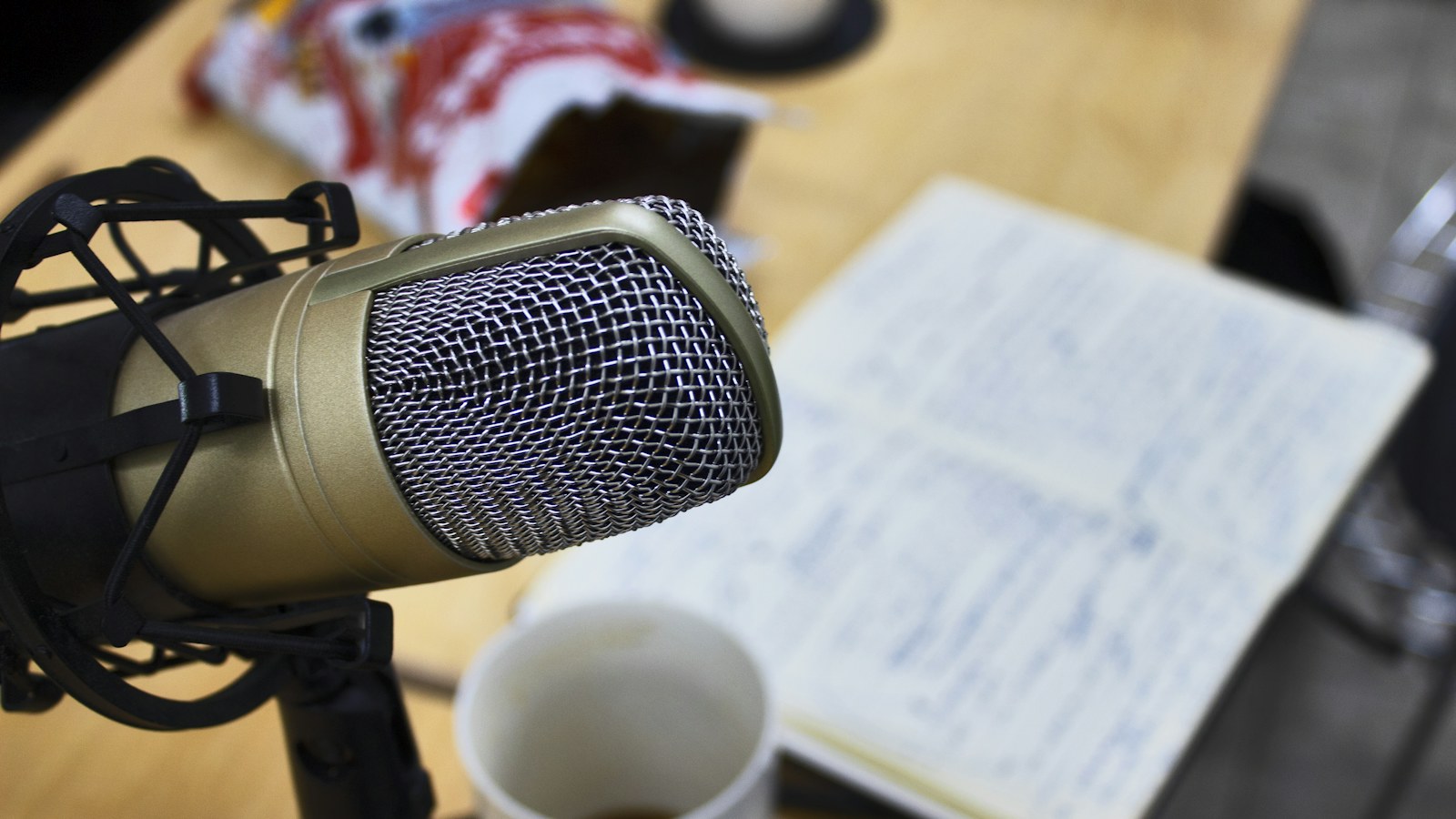
Photo by Gabriel Magurno on Unsplash
By Jason Kidd
Programmer, Talent, President/CEO
Most lists of radio show ideas were written by somebody who has never had to fill four hours on a Tuesday in February. They hand you categories. Talk about movies. Talk about food. Talk about sports. A category is not a show idea. A jock who walks into the studio holding a category produces four hours of opinion nobody asked for, and the audience does what audiences do with that, which is leave quietly.
What survives is narrower and far more repeatable. The ideas that last turn into features, and a feature has four parts: a name, a fixed time, a sound of its own, and a reason for a listener to be there when it happens. I have put a lot of these on the air for stations of every size and watched plenty of them die, and the ones that died almost never died because the premise was weak. They died because nobody gave them a slot and left them alone long enough to become a habit. Here are nine that hold up, and what a station has to do to make any of them stick.
- An idea becomes an audience habit only once it has a name, a fixed time and its own imaging. A good bit that floats around the clock is entertainment. A named feature at 7:40 every morning is an appointment.
- Local is the one thing a national competitor cannot copy. The features that beat a streaming playlist are built on a school, a street, an employer or a bill that only your listeners recognize.
- Nine is more than any station should start with. Take one, run it at the same clock position for ninety days, then judge it. Features die from being tried for two weeks far more often than from being bad.
- Prizes do not need to be big, they need to be specific. A hundred dollars is forgettable. Paying somebody's electric bill in January gets repeated at work the next morning.
- A feature with no production sounds like the jock went off script. Twenty seconds of imaging is what tells a listener this is something the station does on purpose.
What makes a radio show idea worth putting on the air?
The repeatable test kills most ideas, and it kills them for a good reason. A brilliant premise you can execute once is a fun afternoon. A modest premise you can execute every weekday for two years is an asset, because the audience stops having to be told about it and starts expecting it. Habit is the entire product radio sells. Everything else is how we get there.
The local test is what separates a station from a playlist. A listener can get music anywhere, with no commercials, chosen by an algorithm that knows their taste better than we do. What a listener cannot get anywhere else is the sound of somebody who knows which intersection is closed and which school won on Friday. Every idea below is built so that a station in another market could not run it without starting over.
The production test is the one stations skip, and skipping it is expensive in a quiet way. If the feature has no opening, no close and no bed under it, the listener does not hear a feature. They hear the jock talking for longer than usual. That is not a creative problem, it is a twenty second radio imaging problem, and it is the cheapest fix on this entire list.
What are nine radio show ideas that hold an audience?
1. The Sixty Second Local
One minute, once a day, on one thing happening inside your signal. A road closing, a school play, the restaurant that finally reopened. It is the cheapest feature in radio and the hardest for anyone to answer, because the competition does not know the street. Keep it to a minute on purpose. The hard out is what makes it easy for a jock to hit every single day, and daily is what turns it into something people set their morning by.
2. Pay My Bill
A giveaway with a real number attached. Not a hundred dollars, an electric bill in January or a tank of gas before a holiday weekend. Listeners repeat specifics and they do not repeat cash amounts. I have watched small stations get more phone traffic from a four hundred dollar utility bill than from a thousand dollars in cash, because one of those is a story somebody tells at work and the other is a number they forget by lunch.
3. The Hour They Program
One hour, the same day every week, where the music comes from listeners and the jock says so out loud. It does two jobs at once. It gives you an honest reason to collect names and numbers, and it tells the audience that a human being in the building is making choices. Build it into the format clock rather than dropping it on top of a daypart, or it quietly eats an hour that was paying for itself.
4. The Two Question Interview
Guests are the easiest content to get and the easiest to ruin. Twelve minutes with a local author tunes out everybody who does not already know the author. Two questions, three minutes, in and out. The guest leaves happy because they got on the air, and the audience never has to sit through an answer that goes nowhere. Book the same slot every week so the feature carries the guest rather than the guest carrying the hour.
5. The Dated Hour
Not a vague throwback. A year. Everything in the hour comes from one calendar year and the imaging says that year out loud. It gives the music a reason to be where it is, it gives you something you can promote by name, and it converts a scheduling decision into an event. Rotate the year, keep the furniture. The production you cut for it works for every year you ever run, which is why it belongs in the imaging package rather than in a one off session.
6. Listener Voicemail, Produced
Set up a number, ask a real question on the air, play the answers back the next morning with a bed under them. The trick is entirely in the production. Raw voicemail sounds like a mistake. The same calls, trimmed, cleaned up and dropped into music, sound like something the station built. It is also the fastest way I know to get real voices from your own market onto your own air, which is the thing every consultant says you need and almost nobody schedules.
7. The Weekly Argument
A recurring, low stakes disagreement with a name on it. Which gas station has the better coffee, is a hot dog a sandwich, should the high school keep the old mascot. It works because anybody can take a side without knowing anything, and because you can run it until the end of time. Keep it well away from the subjects that cost you listeners. The ritual is the product here, not the topic.
8. The Jobs Board
Three local openings a day, read on the air, free to the employer. In most markets this is the single most requested thing a station does, and it gets you in the door with businesses that have never bought a spot in their lives. It is useful, which is rarer on the radio than it ought to be, and useful is what gets a station talked about by people who do not otherwise talk about radio.
9. The Mystery Sound
The oldest idea on this list and the reason it has outlived most of what replaced it. A short unidentified sound at the same minute every morning, with a pot that grows until somebody names it. Nothing else creates appointment listening that cheaply. It lives or dies on the audio, because the sound has to be genuinely fair and has to be instantly obvious the second you reveal it. Cut it properly or do not run it.
How often should a new radio show feature run?
The common failure is not laziness, it is enthusiasm. A station decides to fix the morning show, launches six new bits in one month, and none of them gets enough repetition for a listener to notice it exists. Two weeks later the meeting concludes that none of them worked. Nothing was tested. Six things were mentioned.
Run one. Put it in a slot a listener can find without a clock, meaning a time like 7:40 that lands the same distance after the hour every day. Promote it inside the other dayparts with real production rather than a liner the jock reads differently each time. Then leave it alone through a full ninety days, which is roughly how long it takes a daily habit to form in an audience that is not paying close attention to begin with. If it is still flat at ninety days, kill it cleanly and give the slot to the next idea.
Where do radio show ideas come from when the well is dry?
Prep services are fine for the national layer, and most jocks use one. The problem is that the national layer is the part a listener already saw on their phone an hour ago. It is not why anybody turns on a radio in your market, so building a feature on it means competing with the whole internet at the one thing the internet is best at.
The local layer takes more work and it is sitting in plain sight. Pull the school district calendar for the year and mark every date that moves traffic or changes a parent's morning. List your ten largest employers and know their shift change times. Watch what people complain about locally, because a complaint repeated by strangers is a feature waiting for a name. Most of the jocks I work with keep a running file of these, which is the unglamorous part of the job that fills most of a jock's day long before the mic ever opens.
Do listeners on a music station really want more talk?
Every piece of research a station has ever shown me says the audience wants less talking, and every one of those stations has a morning show that talks more than anybody and wins. Both things are true. What people mean when they say less talking is that they are tired of being stuck inside a break with no idea when it ends or what it is for.
A feature answers that automatically. The name tells the listener what this is, the open tells them it started, and the close tells them it is over. Inside those boundaries you can hold somebody for three minutes on a subject they did not care about when it began. Outside them you have ninety seconds before a hand reaches for the dial. That is also why a well tracked shift can beat a live one that rambles. The audience is not timing you, they are listening for shape.
How do you tell whether a radio show idea is working?
The tell I trust most is unprompted naming. When a caller says the name of the feature instead of describing it, the thing has entered the audience's vocabulary and you now own a piece of their week. That usually shows up well before anything appears in a book, and it shows up in places a station is not watching: in the way clients mention it on a sales call, in what the staff at the coffee shop say to your jock.
Count the hard numbers too. Texts and calls inside the feature's slot against the same slot the week before it launched. Entries if there is a prize. Clicks if you put it online. None of that is ratings, and none of it needs to be. If a daily feature is ninety days old and still producing nothing you can count, the audience has answered. A good programming consultant will tell you to kill it, and killing it is not a failure, it is the slot being freed for the next one.
What does a new feature need before it goes on the air?
Write the name first, because the name decides the sound. Two or three words a listener can repeat to somebody else, with your station's name or dial position inside it if that can be done without making it clumsy. Then cut the elements. An open, a close, a bed under the body, and a short promo that runs in the other dayparts so the feature is not relying on the audience stumbling into it. That is a small radio imaging production job, usually an hour of studio time, and it is the difference between a feature and a jock improvising.
If the feature is becoming part of what the station is rather than one month's experiment, it earns a sung element. A short custom radio jingle for a daily franchise is the oldest trick in the business and it still works, because people remember what they hear sung far longer than what they hear read. Stations running thin on talent hours can also voice track the feature separately from the live shift, which is how a lot of small market stations get a daily franchise on the air without adding a body.
None of this is expensive. It is the part that gets skipped when a good idea arrives on a Thursday and somebody wants it on the air Friday. Give the idea a name, a slot, twenty seconds of production and ninety days, and you will know whether you have a feature. Skip those and you will have had nine ideas and no answers.
If you want to put one of these on the air and have it sounding like a franchise from day one, send us the name and the slot. We will cut the open, the close and the bed, and you can run it Monday. Start with our imaging production or just get a free demo and tell us what you are trying to launch.
Launching a new feature this quarter?
Talk to Virtual Jock about imaging, custom jingles, voice tracking and programming help. Free demo, no obligation.
Get a Demo