How to Make a Radio Commercial, Start to Air
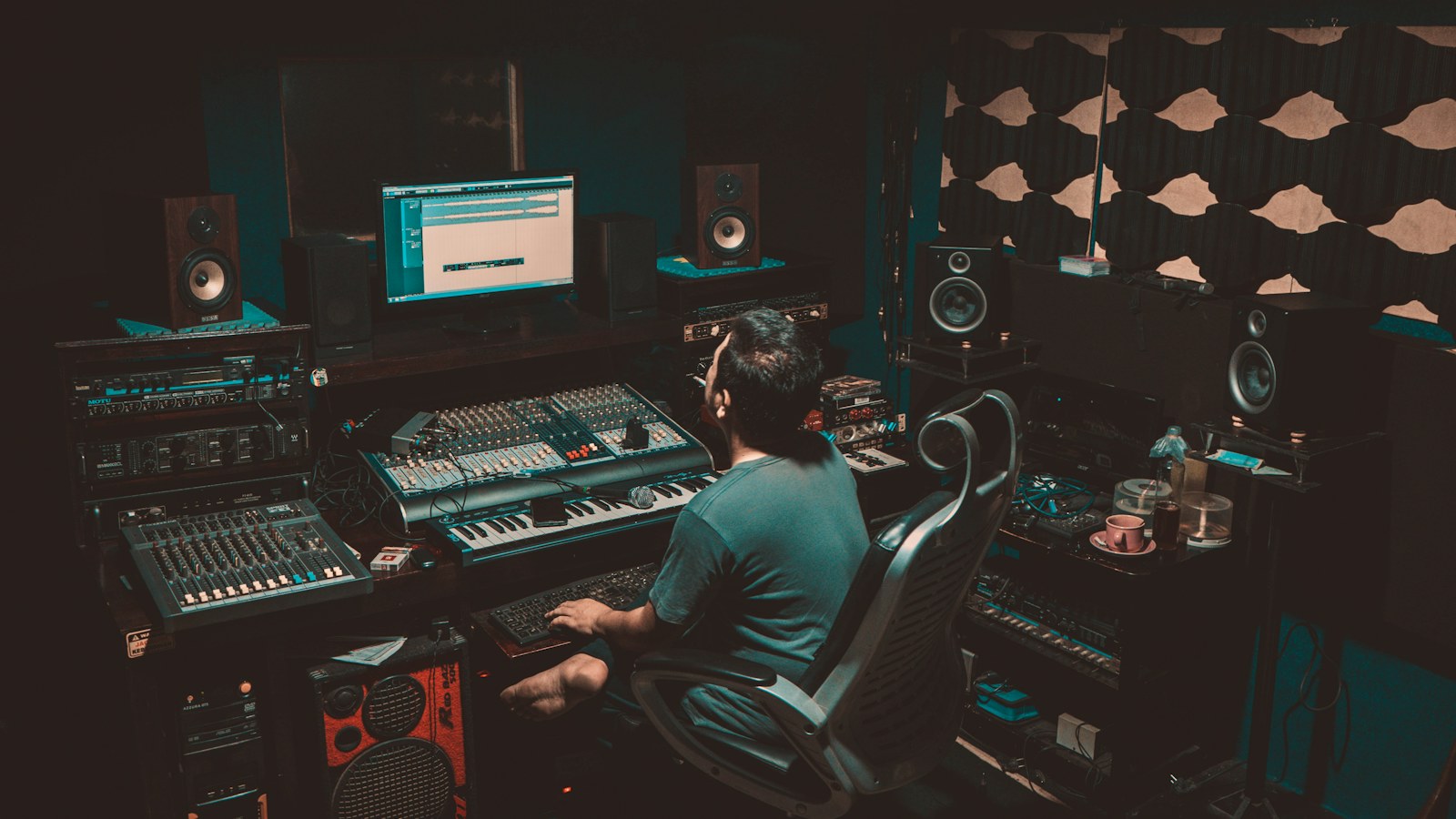
Photo by Jesman fabio on Unsplash
By Jason Kidd
Programmer, Talent, President/CEO
Search how to make a radio commercial and most of the first page is software that promises a finished spot in under a minute. The pitch is not wrong about the mechanics. You really can get a voice reading words over music that fast. What gets left out is everything that decides whether the spot does anything for the advertiser, and almost all of that happens before anybody records a syllable.
We cut spots every day for stations that sell them to local businesses, so this is the process from the production side rather than the sales side. Here is what the stages actually are, the numbers that constrain them, and the places where a spot goes wrong early enough that no amount of mixing saves it.
- A 30 second radio commercial holds about 75 words at a pace a listener can follow, and closer to 65 once a phone number or a legal line is in it. Copy written past that gets read fast, and fast reads do not persuade anyone.
- Production presents copy, it cannot repair it. A clean mix on a list of features still sounds like a list of features, so the single biggest quality decision is made in the script.
- Cut every length you will need in one session. A :60 and a :30 from the same read cost almost nothing extra, and coming back three weeks later for the second one costs more and sounds different.
- Mix for your air chain, not for the studio. Station processing compresses and limits everything, so a spot built with big quiet to loud swings arrives on the air squashed with the quiet parts gone.
- Sometimes the right answer is not a produced spot at all. A live read from your morning show beats production on a weekend sale, and a local owner who sounds like himself often outperforms a polished voice reading his words.
What actually happens between a script and a finished radio commercial?
Copy comes first, and it gets timed before it gets recorded. We read it aloud against a stopwatch, mark where the pace has to breathe, and find the words the client will insist on keeping even though they cost two seconds each. Most scripts arrive long. Fixing that is a conversation about what the spot is for, not a trim, which is why our radio commercial production includes the script writing rather than charging for it as an extra. The stations we work with are selling to a florist and a tire shop, and neither of them has a copywriter.
Casting is the stage that gets skipped most often and matters more than people expect. The voice carries the advertiser's credibility for thirty seconds. A warm female read and a hard sell male read on identical copy produce two completely different spots, and the right choice depends on who the advertiser's customer is rather than on who sounds best in isolation. We keep major market talent on call for exactly this reason, because a station's own staff announcer is not always the right instrument for somebody else's business.
The session is the part everyone pictures. It is also the fastest. A good voice delivers three or four usable takes of a :30 inside ten minutes, and the direction matters more than the retakes: where the emphasis lands, which word the sentence turns on, whether the read is talking to one person or announcing to a room. Then the mix, which is where the bed, the effects, the tag and the levels get built around the read. Then delivery, in the file format your automation actually ingests, named the way your traffic department names things, with the kill date written down somewhere other than an email.
How many words fit in a 30 second radio commercial?
This is the most common problem we see, and it is almost never the advertiser being unreasonable. A business owner hands over the copy from a flyer because the flyer is what they have, and a flyer is 300 words. Reading 300 words in thirty seconds is physically possible and completely useless, because the listener is merging onto a highway and retains the one thing you let them retain.
The fix is deciding what the spot is for before cutting anything. One reason to call. One offer. One way to reach them. A phone number spoken twice costs around six seconds of a thirty second spot, which is a fifth of the whole commercial, so it is worth asking whether the number earns that or whether the business name is the thing people will search. Street addresses are usually the worst value in the script. Nobody writes one down from a car, and the words spent on it would carry the offer instead.
Why does the script decide whether the spot works?
I have mixed spots that were technically excellent and did nothing, and the reason was always visible in the script. Six benefits, no priority between them, and a closing line that could belong to any business in the category. When the advertiser calls the station in week three to say radio does not work for them, that is usually what happened, and the station eats the blame for a copy problem.
The other half is the approval process. Copy that passes through an owner, a manager and somebody's spouse comes back with every edit added and nothing removed, because each person protects their own sentence and nobody is responsible for the length. The way out is to agree on the one thing the spot is selling before writing, so later edits get measured against it instead of simply appended. That is also why unlimited revisions are worth more than they sound. The revisions that matter are the ones that happen after the client hears the read and realizes the emphasis is in the wrong place.
What is the music bed actually doing under the voice?
Bed choice does more work than most clients believe. The same script over an acoustic guitar loop and over a driving synth bed sells to two different people. Tempo sets how fast the read can go without sounding rushed, which means the bed is partly a copy length decision as well as a mood decision. A slower bed with the same word count forces a faster read and the whole thing gets tighter and less convincing.
Ducking is the mechanical part. The bed drops a few decibels when the voice comes in and comes back up in the gaps and at the tag, so the words stay on top without anyone noticing the move. Done badly it pumps audibly. Done well it is invisible and the spot simply sounds clear. The bed is also where a spot dates fastest, faster than the voice or the copy, which is the same aging problem that applies to a station's own package. We wrote about that cycle in how long a radio jingle package lasts before a re-sing, and the logic carries straight over to commercial beds. If an advertiser is running a signature bed across a year of spots, it is worth treating it as a piece of their identity and having it written rather than licensed, which is what our custom radio jingles work is for.
How many versions of a spot does one campaign need?
The reason to do this on day one is practical. Your log is not made of thirty second holes. An avail opens at :60 in a feature position, or a :15 slots in next to a sponsorship, and a campaign that only exists as a :30 cannot take either. Traffic then either declines the placement or stretches something, and the advertiser quietly gets less inventory than they paid for.
Doing it later is genuinely worse, not just slower. The same voice on a different day in a different room is not the same voice. Mic position shifts, the talent has a different amount of coffee in them, and the two lengths end up sounding like they came from two campaigns, which they did. Cut them together and they are siblings. Dealer tags work the same way. If four locations share one spot, record the four tags in the session and the whole set matches. Record them in March and add a fifth in June and the fifth one stands out to anyone paying attention, including the dealer who paid for it.
What does station processing do to a finished commercial?
This is the detail that separates a spot built by somebody who works in radio from a spot built by somebody who works in audio. Both can be mixed beautifully. Only one of them is mixed for the thing that will actually process it. The whisper that opens the spot and makes the room lean in works in a studio and gets lifted to the same level as everything else by the time it hits a car speaker.
Practically, that means a controlled dynamic range, consistent perceived loudness across every spot in the break, and no reliance on silence for effect. It also means spots should sit sensibly against the station's own imaging. A commercial that is noticeably denser or brighter than the radio imaging around it draws attention to the break rather than to the advertiser, which is the opposite of what both of you want. If you do not know what your chain is doing, send us a recording off the air rather than the file you uploaded, and we will mix the next one against what listeners are actually getting.
When is a plain announcer read better than a produced spot?
We sell production, so take this as a production house telling you when not to buy it. A live read carries the host's relationship with the audience, and that relationship is worth more than a mix on anything short term or personal. Weekend sales, a one day event, a thank you for storm cleanup, a last minute inventory push. Those are live read jobs, and running them as produced spots costs money and loses the endorsement.
The owner's own voice is the other case. Technically it is usually the worse recording. He will rush, he will stumble on the second half of the sentence, and his room will not be treated. He will also sound exactly like the person the listener meets at the counter, and in a small market that is a real advantage that no amount of polish replicates. The job then is to direct him well and edit lightly instead of smoothing him into somebody else.
The same judgment applies to synthetic voices, which is now a live question for every station because the tools are cheap and the search results are full of them. A synthetic read is defensible on a dealer tag, a legal line or a placeholder while a client approves copy. It is a bad trade on the spot that has to make somebody believe a business. We laid out where that line sits in why AI can fake a voice but not your market. The short version is that the technology has solved the sound of a human and not the trust of a local one.
What should you send a production house to get a spot back fast?
Nothing on that list is hard to gather, and the difference it makes is large. We hold a 48 hour turnaround on production, and the jobs that miss it almost never miss on the work. They miss because the length was never agreed, or the client's one non negotiable phrase arrived after the mix, or nobody knew which file format the automation wanted. Each of those costs a round trip, and two round trips is a week.
The raw facts are enough if there is no copy yet. Hours, the offer, what makes them different from the shop two blocks over, and who they are trying to reach. Writing from that is faster for everybody than rewriting a flyer. A reference spot helps more than a description of a mood, because a station owner and a producer rarely mean the same thing by energetic. And if budget is the part that is holding the campaign up, say so early, since we work on cash or barter and barter is often what gets a small advertiser on the air in the first place.
If you want to see what this sounds like on your own station rather than in the abstract, send us one script you are stuck on. We will write it to time, produce it, and you can put it next to whatever you are running now. Start with our radio commercial production services or just get a free demo and tell us what the advertiser is trying to sell.
Need a spot produced this week?
Talk to Virtual Jock about commercial production, jingles, imaging, and voice tracking. Free script writing, under 48 hour turnaround, cash or barter.
Get a Demo