Radio Segment Names Listeners Remember
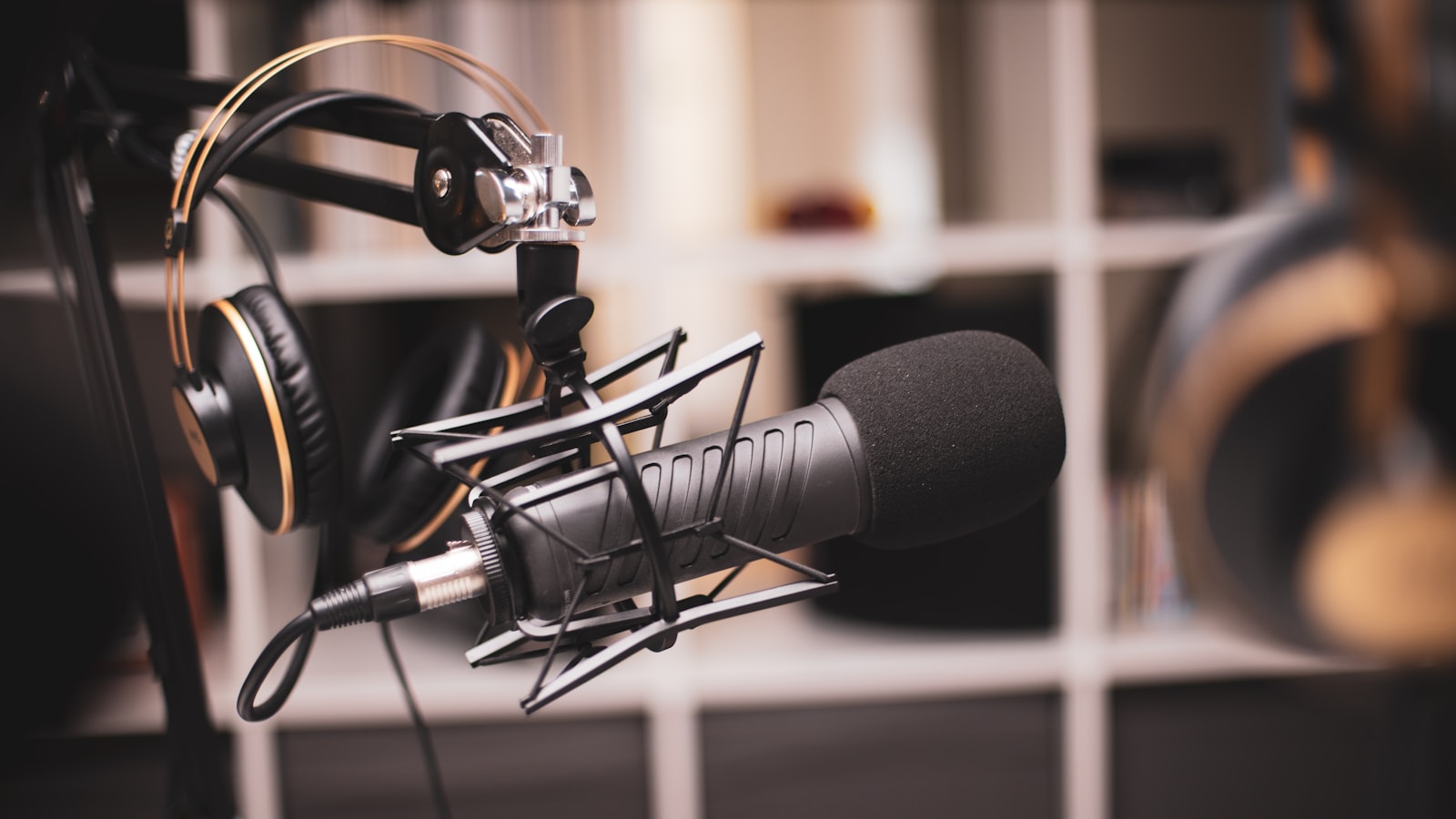
Photo by Jonathan Farber on Unsplash
By Jason Kidd
Programmer, Talent, President/CEO
I sat in a programming meeting years ago where we spent ninety minutes naming a two song music feature. Ninety minutes. We came out with something clever that nobody in the building could say without smiling at how clever it was, and four months later I noticed the jocks had quietly gone back to saying "here's two in a row." The name never took because it was built to impress the room, not to survive a live break at 4:40 on a Tuesday.
That is the whole problem with naming station features. Segment names get decided in a conference room by people looking at a whiteboard, and then they get used at speed, out loud, by someone with eleven seconds of ramp and a phone light blinking. A name that cannot make that trip is not a name. It is a line item in a programming document.
- A radio segment name has one job: to let a listener ask for the thing, tell a friend about it, and know roughly when it runs. If a name does not do all three, it is decoration.
- Names that describe the mechanic ("the two song sweep") almost always lose to names that describe the payoff or the appointment, because listeners care what they get, not how you built it.
- The say-it-out-loud test kills more bad names than any focus group. If your talent needs a setup sentence before the name makes sense, the name is doing zero work.
- Naming everything is the same as naming nothing. Most music stations should carry a handful of real benchmarks, not fourteen.
- A named segment is not finished until it has produced audio and a fixed clock position. Without both, it is just something the jock says sometimes.
What makes a radio segment name work?
Think about what a name is actually for. It is a handle. It gives your audience a way to hold onto a recurring piece of your station so they can find it again, wait for it, and mention it to somebody else. Every good name I have ever run did one of two things: it told you when, or it told you what you were getting.
The when names are the most durable in music radio, and it is not close. Anything built around a time slot or a count gives a listener an appointment they can keep without thinking. Nine songs at nine. A five o'clock ride home. A noon countdown. You are handing them a reason to be there at a specific moment, and the name does the promotion for you every single time your talent says it. That is compounding.
The what names work when the payoff is genuinely worth naming. A feature where listeners get a second shot at a song the station dropped. A block that runs commercial free through the afternoon drive. A daily bit where a caller wins something real. In each case the name can just say the thing, plainly, and the plainness is the strength.
Where stations go wrong is naming the machinery. Nobody outside your building cares that a feature involves two songs and a sweeper. They care that they get more music. Name the result.
Why do most station benchmark names fail?
Here is the test I run now, and I run it before anything else. Say the name out loud, at your normal air pace, with music under it, in the middle of a real sentence. Not slowly. Not lovingly. The way it will actually get said forty times a week. Most names fall apart in about two seconds. They tangle, or they require a pause, or the pun only works if you land on a syllable nobody lands on naturally.
The second failure is quieter and more common. A station decides to name every feature, so now the morning show has five named bits, middays has three, afternoons has four, and there is a named weekend countdown. Nothing is special because everything got a title. A benchmark is supposed to be a landmark on your station. You cannot build a skyline out of landmarks. Pick the two or three things you would genuinely promote to a stranger, name those, and let the rest just be good radio.
Then there is the explaining problem. If your talent has to say "that's where we play two songs back to back from the same artist and you tell us which one came out first" every time they introduce it, the name has failed and the setup sentence is doing all the work. A name should shorten the break, not lengthen it.
Last one, and this one costs real money: names nobody can find. Listeners will search for a feature they liked. If you named it something that is also a common English phrase, a movie title, or a national syndicated bit, you are invisible in that search and you have handed your promotion to somebody else. Check before you commit, the same way you would when choosing a station name.
How do you name a segment for your format?
Formats are not just music libraries. They are different conversational registers, and a name that sounds right on one station sounds borrowed on another. I have inherited plenty of libraries where you could hear that a feature name was written for a different kind of radio, and listeners register that mismatch even though almost none of them could tell you what is wrong.
On country and classic hits, listeners respond to names that sound like a person said them. Warm, plain, a little familiar. Nothing that sounds like it was engineered. The station feels like a neighbor, so the features should be named the way a neighbor would name them.
On CHR the currency is speed and energy, so names get shorter and numbers do a lot of the lifting. Counts, times, quick two and three word titles that can be shouted over a ramp without losing anything. Rock goes the opposite way, rewarding understatement and a little edge, because overselling a feature name on a rock station reads as trying too hard and that is the one thing the format punishes fastest.
News and talk go the other direction entirely. Be literal. Listeners are scanning for information, so a name that says exactly what the segment delivers beats anything clever. This is one of those places where the honest answer is boring and correct, and it is usually where I end up in a radio programming consulting conversation talking a station out of a name they had already fallen in love with.
Should the segment name include your station name?
There is a real argument for it. A feature named with your brand in it cannot walk out the door with a talent who leaves, and if a listener searches the name, you own the result. Every mention on the air becomes a brand mention whether the listener is paying attention or not.
The cost is time and rhythm. A name with the station brand inside it will get shortened on the air within about a month regardless of what the programming document says. If your jocks are going to abbreviate it, you may as well design the short version yourself and control what it becomes.
What I usually land on is a split. Put the brand in the tentpole, the one feature you would buy billboards for and the one you would put in a TV spot. Leave the daily benchmarks lean. That way the brand connection lives where the promotion budget is, and your everyday breaks stay quick.
How do you know when a segment name is done?
The most useful signal costs nothing to collect. Listen to your own station for a week and count how often talent says the name without being told to. When a feature is alive, jocks reach for the name because it makes the break easier. When it is dead, they route around it and describe the thing instead. That drift is your answer, and it shows up long before anything else does.
Real triggers for retirement are straightforward. The mechanic changed and the name now describes something you no longer do. A sponsor attached to the name walked. The personality it was built around is gone, and running their feature with somebody else in the chair feels like a rerun. In each of those cases the name has started lying to your audience, and a name that lies is worse than no name at all.
What is not a trigger is internal fatigue, which is the single most common bad reason a station kills a working benchmark. Everyone in the building has heard it hundreds of times. Your P1 listener has heard it twice this week and has just now started to recognize it. Names accrue equity the way imaging and jingles do, through repetition that feels tedious inside the building and barely registers outside it.
What does a named segment need besides a name?
This is the part stations skip, and it is the part that decides whether the name ever becomes real. A feature announced cold, at a slightly different time each day, with no audio around it, is not a benchmark. The listener has nothing to lock onto except a phrase, and a phrase alone will not cut through an hour of radio.
Give it a stager, or a short open, in the same musical family as the rest of your station. Give the talent a bed to work over so the break has energy underneath it instead of a person talking in a quiet room. That audio is what tells a listener something is starting, which is the signal that turns a segment into an appointment. It comes out of the same library as everything else, which is one more reason to think about radio imaging production as one system rather than a pile of individual orders. If you want the full inventory of what belongs in that library, I broke it down in what is actually in a radio imaging package.
The bigger version of this is your sung identity. The features that stay in a market for a decade tend to have a musical hook attached, because melody sticks in a way spoken words do not. That is the same reason a station's custom jingle package outlasts almost every other branding decision a station makes. If a feature is going to be with you for years, consider giving it a piece of music of its own.
Then put it in the clock and leave it there. Same daypart, same position, every day. The name plus the audio plus the slot is what makes a listener able to say "that's the thing they do at five," and that sentence, said by a real person to another real person, is the entire point of naming anything.
None of this replaces having something worth naming in the first place. A weak feature with a great name is still a weak feature, and picking segments your audience actually wants is a separate discipline I have written about in choosing the right topics for your show. Name the good stuff. Fix or drop the rest.
Get this right and the payoff is quiet but permanent. Somewhere in your market, somebody is telling a coworker to listen at five because of a thing your station does, and they can only do that because the thing has a name they could remember and repeat. That is what you are building. Not a clever line for a programming document, a phrase a stranger can hand to another stranger.
Want your benchmarks to sound like events?
Talk to Virtual Jock about programming consulting, imaging, and station branding. Get a free demo, no obligation.
Get a Demo