What's Actually in a Radio Imaging Package
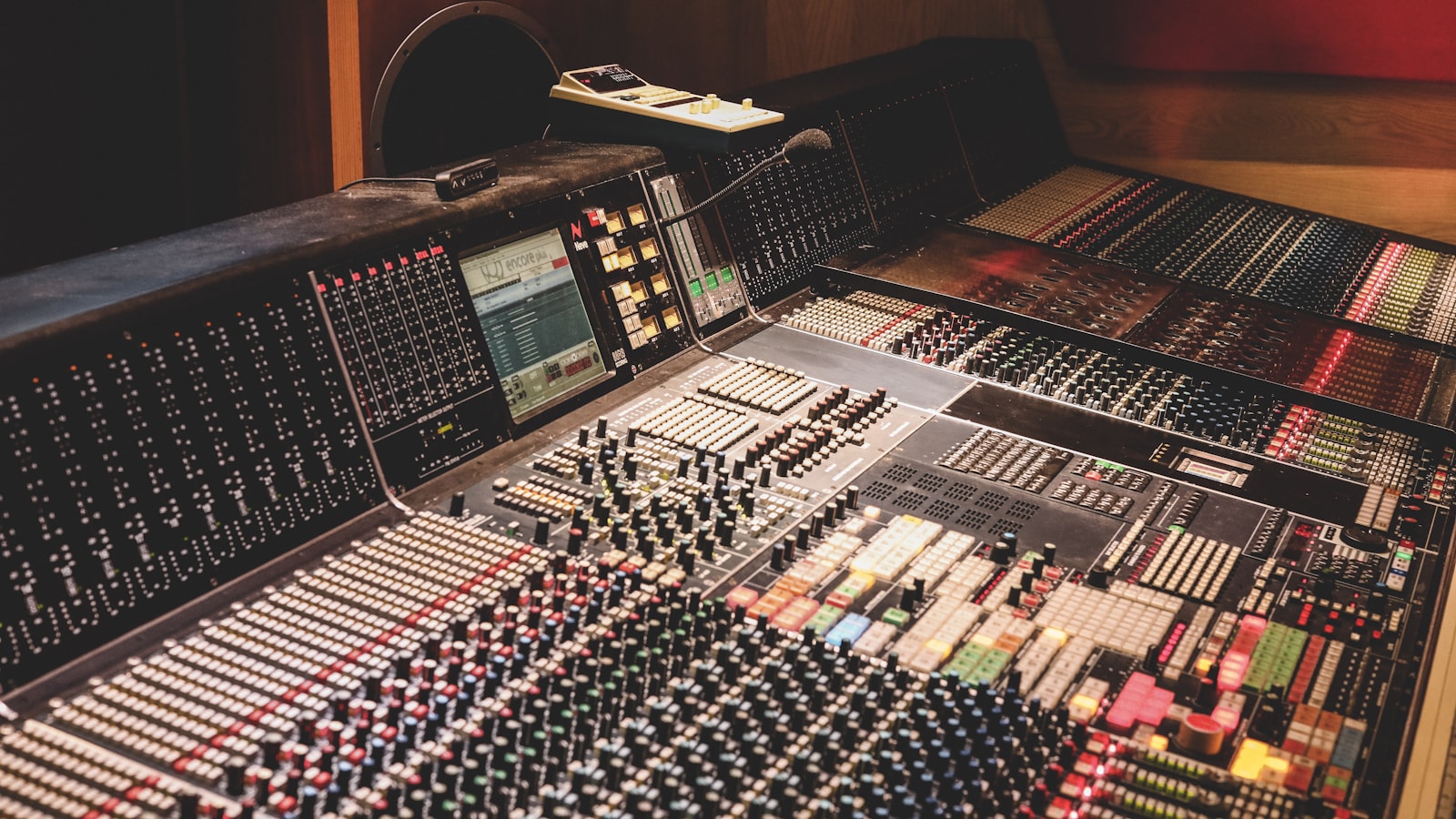
Photo by Marc Fanelli-Isla on Unsplash
By Jason Kidd
Programmer, Talent, President/CEO
Every program director I talk to tells me their imaging is handled. Then I listen to the station for an hour. What I usually hear is a legal ID cut in one era, a couple of sweepers written for a positioning statement the station walked away from two books ago, and a promo bed that argues with the song coming out of it. That is not an imaging package. That is a folder.
Part of the problem is the phrase itself. "Imaging package" means something different at every shop that sells one. To some vendors it means forty shelf cuts with your call letters dropped in. To others it means a custom library written for your format and your market. You cannot buy well until you know what the pieces are and what each one is supposed to do, so let's go through the actual inventory.
- A radio imaging package is the produced audio between the songs: legal IDs, sweepers, liners, ramps, stagers, promo and contest beds, and show opens, all built from one voice and one musical identity.
- The legal ID is the only cut the FCC actually requires, and it has to carry your call sign and city of license near the top of the hour. Every other cut in the library is a branding decision you get to make.
- Ramps are the highest-value cuts you own, because they hand a jock a timed instrumental to talk over and a post to hit, which is most of what makes a station sound tight.
- Imaging has to be mixed for your processing chain, not for studio headphones. A dense mix that sounds huge on monitors collapses once the air chain squashes it.
- A small library built for your format and refreshed on a schedule beats a big generic one, because the cuts actually get used instead of skipped.
What is a radio imaging package?
Imaging is the connective tissue of a radio station. It is every piece of produced audio that is not a song, a spot, or a live break. When it is working, a listener never consciously notices it. They just get the sense that the station is going somewhere, that it has energy, that somebody is driving. When it is not working, an hour of radio feels like a shuffle with occasional talking.
The word "package" is where stations get into trouble, because it implies a box you buy once. In practice a good imaging library is closer to a living thing. You build a core, you add to it as your promotions and your positioning move, and you retire cuts that no longer say anything true about the station. The stations that sound consistently sharp are almost never the ones that bought the most audio. They are the ones whose audio was built on purpose.
What's actually inside an imaging package?
Legal IDs. This is the one piece of audio you are legally obligated to run. Your call sign and your city of license, at or near the top of the hour. Most stations treat it as a compliance chore and cut one version. That is a wasted asset. The legal ID lands at the most predictable moment in your hour, so it should sound like the best thing you own, and you should have enough variations that regular listeners are not hearing the identical file twelve times a day.
Sweepers and liners. These are your positioning statements: the short produced pieces that say what the station is and who it is for. A sweeper generally moves you from one song into the next with production under it. A liner is usually drier and shorter. Both exist to repeat the one idea you want a listener to remember about you. If you cannot say that idea in a sentence, no amount of production will rescue the cut, and that is a programming conversation before it is a production one.
Ramps. If I could only buy one family of cuts, it would be these. A ramp gives your jock a timed instrumental to talk over with a clear post where the vocal starts. That is the single most useful tool in a talent's kit, because it turns a hand-off into a produced moment. Stations that sound loose are almost always stations whose talent has nothing good to talk over.
Stagers and transitions. The short bursts that move you between segments: into the weather, out of a break, into the countdown, back from news. They are small, they are cheap to produce alongside everything else, and they do more for pace than almost anything else in the library.
Promo and contest beds. Music beds that sit under your own promotional copy so your promos do not sound like a person reading in a quiet room. Get these built as part of the same package and in the same musical family, otherwise every promo you cut for the next year is going to feel like it came from a different station.
Show opens and daypart imaging. Named opens for your morning show, your night show, your specialty programming. These are what give a daypart its own identity while still sounding like the same station, and they are the cuts most often skipped by stations buying off a shelf, because a shelf cannot know your show is called anything in particular.
Sitting underneath all six families is your sung identity. The jingle and the imaging are different jobs, and I have written separately about what a station jingle is actually doing, but they need to share a musical DNA or the station splits into two sounds that argue with each other.
Does all your imaging have to use the same voice?
Your imaging voice is the narrator of your station. Listeners will hear that person more hours per week than they hear any individual jock, and they will never learn their name. That anonymity is the point. The voice becomes a texture the audience associates with you, which is exactly why swapping it casually is expensive in a way that does not show up on any invoice.
Where a second voice earns its place is contrast with a purpose. A different read on a contest cut so the promotion cuts through the rest of the hour. A distinct voice on a night show that is genuinely trying to feel like its own world. What does not work is three voices scattered across the library because three different vendors produced audio for you over four years. That is not variety, it is drift, and listeners feel it even when they cannot name it.
The other thing worth saying plainly: the voice matters more now, not less. Anyone can generate a serviceable spoken station ID in a few seconds. What that does not give you is a signature your market recognizes instantly, which is the argument I made about why AI can fake a voice but not your market. Consistency is the asset. Guard it.
How often should a station refresh its imaging?
There is no calendar answer here, and anybody who gives you one is selling a subscription. The honest trigger is change. If your positioning statement is different than it was, your sweepers are now lying to your audience. If you launched a new morning show, running the old show open is telling listeners you have not really committed. If a competitor repositioned against you, some of your cuts are now answering a question nobody is asking.
What I would push back on is the opposite failure, which is rebuilding everything every year because it feels productive. Imaging accrues equity the same way a jingle does. A cut your audience has heard for two years is doing brand work precisely because it is familiar. The move is continuous small additions with a periodic core rebuild, not an annual scorched-earth replacement of audio that was still working.
Seasonal and event imaging is the easiest win most stations leave on the table. Holidays, the local fair, football season, a station-wide promotion. These are short, cheap to produce in a batch alongside your core order, and they make the station sound present in its market in a way that no evergreen cut can.
Why does imaging sound cheap even when the copy is good?
This is the part that separates people who produce imaging for a living from people who own a copy of the software. Your audio processor is going to do things to that cut. A mix that is dense and gorgeous on studio monitors gets flattened on the air, and the first casualty is intelligibility, because the bed and the voice are competing for the same space. Imaging has to be built with the destination in mind, which means leaving room for the voice and not mistaking loudness in the studio for impact on the radio.
Format fit is the other half. A country station and a rhythmic CHR should not sound like they came off the same assembly line, and listeners register the mismatch instantly even though almost none of them could explain what is wrong. When the music underneath your imaging does not belong to the same world as the music you play, the cut announces itself as an advertisement for your station rather than a part of it.
Then there is timing, which is invisible until it is wrong. A ramp whose post lands two seconds off leaves your talent stepping on a vocal every single time they use it, so they quietly stop using it. Half the imaging libraries I have inherited had perfectly good cuts nobody touched, purely because the timing made them awkward to work with. Cuts that do not get played are not cheap. They are just spend.
What should you ask for before you buy an imaging package?
Start with ownership and exclusivity. Is this audio yours, and is any of it running on a station three markets over? Shelf audio has its place and it is not automatically bad, but you should know which category you are buying so you are not paying custom money for something generic.
Then ask about delivery, which nobody asks about and everybody regrets. You want the mixed cuts, and you want the dry voice tracks and the beds separately. The day you need to re-cut one line because a promotion changed, having the stems is the difference between a five minute fix and re-ordering the whole thing. Ask for files named in a convention your automation system can ingest cleanly, because an imaging library that takes a week to load is one that gets loaded badly.
Ask whether the package can grow. Your station is going to run promotions you have not thought of yet. A vendor who can add cuts in the same musical family six months from now is worth more than one who sold you a bigger box today.
Finally, ask them to listen to your station before they write a word. This is the work we do at Virtual Jock every day: custom radio imaging production built to a station's format, positioning, and market, with the sung identity built to match so the whole station sounds like one thing. And if the positioning itself is not sharp yet, that is a programming consulting conversation first, because the best-produced sweeper in the world cannot sell a station that has not decided what it is. If you want the longer view on how all of this ladders up, we covered imaging and brand identity in more depth as well.
Imaging is not decoration you add after the real work is done. It is the sound of your station having a point of view, running every hour, whether anyone is talking or not. Build it like it matters, because the space between the songs is where a listener decides what kind of station this is.
Want your station to sound like one thing?
Talk to Virtual Jock about custom imaging, jingles, and station branding. Get a free demo, no obligation.
Get a Demo